

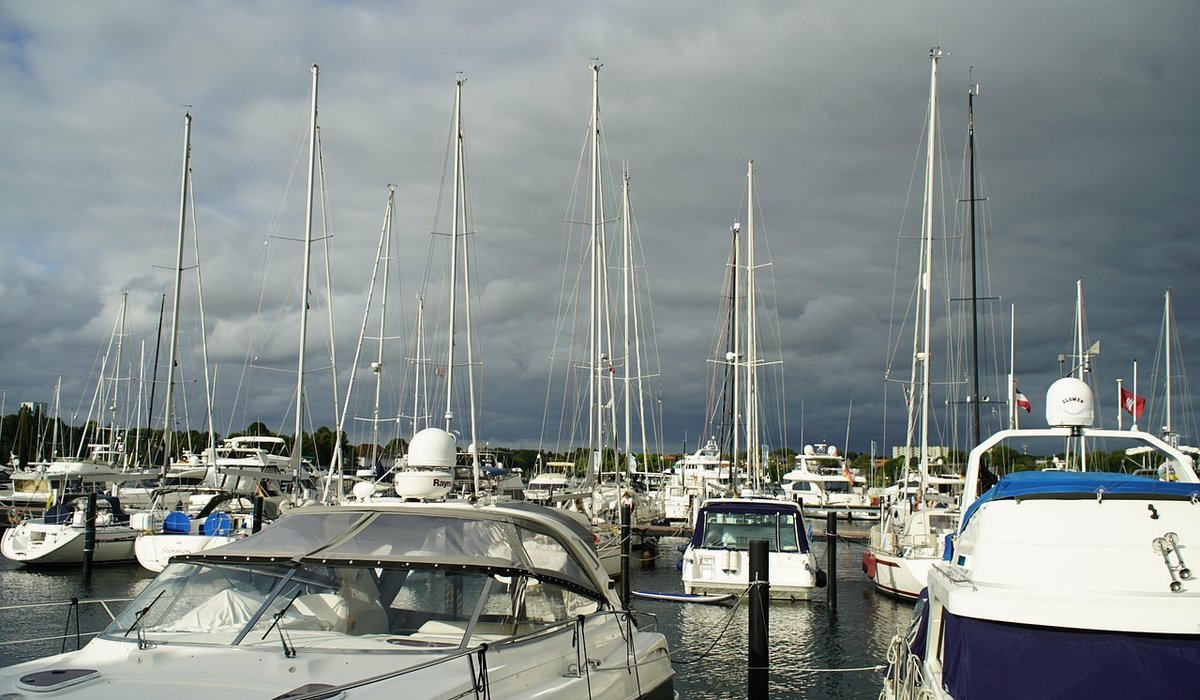
There is something special about anchoring in a tidal harbour. The water moves with a quiet purpose, the sky shifts, and your boat tugs gently on her chain. But as any experienced sailor will tell you, that peaceful scene depends on getting a few things right. Tidal harbours demand more than dropping a lump of metal and hoping. With the correct anchor, a carefully calculated scope, and a reliable anchor alarm, you can hold firm as the tide turns and the wind shifts.
Read the Harbour Before You Drop Anchor
Every tidal harbour has its own rhythm. Before you even think about anchoring, spend ten minutes studying the chart, the tide tables, and the world around you. How much does the water rise and fall? In places like the Bristol Channel or the Solent, the range can be eight metres or more. That means the depth you see now will be very different in six hours. Note the direction and strength of the tidal stream. It usually reverses twice a day, and your boat will swing to face it. Look for patches of mud, sand, or shingle on the chart, and check the seabed with a lead line or your depth sounder if you can. Mud offers excellent holding; weed and rock are trickier. If there is a harbourmaster or a local sailor nearby, ask where they would anchor. That kind of knowledge is worth more than any chart.
Pick an Anchor That Suits Tidal Ground
Not all anchors are equal, and the best choice depends on the ground and the conditions. In a tidal harbour, you want an anchor that sets quickly and resets reliably when the tide turns. A modern scoop anchor, with its concave fluke, performs well in mixed sand and mud. A traditional plough anchor is a good all-rounder but can struggle in soft mud or thick weed. A fluke anchor, with its flat triangular blades, bites well in sand but may foul in kelp. Weight matters: a heavier anchor gives more security, but you must be able to handle it. As a rule, add at least five to ten metres of chain between the anchor and the rope or rope-to-chain splice. The chain’s weight keeps the shank low and helps the anchor dig in. If you use an all-rope rode, you will need more scope to achieve the same holding power.
Calculate Scope for the Full Tidal Range
Scope is the ratio of the length of rode you let out to the distance from your bow roller to the seabed. Most people calculate scope using the depth under the boat right now. That is a mistake in a tidal harbour. You must calculate for high water, because that is when the rode will be shortest. Use this simple formula: scope length = (depth at high water + bow height above the water) × scope ratio. In calm conditions, a chain rode needs about 3:1, and a rope rode needs 5:1. But in a tidal harbour with reversing currents and shifting winds, use 5:1 for chain and 7:1 or more for rope. For example, if high water is eight metres deep and your bow roller is 1.5 metres above the water, the total is 9.5 metres. At 5:1, you need 47.5 metres of rode. Mark your chain or rope every ten metres so you can see how much you have out. Too little scope and the anchor will pull out; too much and you will swing into your neighbours.
Set the Anchor with Care and Verify It
Setting an anchor is a skill, not a lucky dip. Approach your chosen spot slowly, ideally into the wind or current. Lower the anchor gently to the seabed rather than throwing it. Let the boat drift back or reverse slowly, paying out rode as you go. Once you have the correct scope, snub the rode around a cleat and increase engine revs in reverse. You should feel the anchor bite and the boat come to a stop. Now verify your set. Pick two fixed points ashore, such as a church tower and a tree, and take a transit. Watch them for a few minutes. If they move, you are dragging. In a tidal harbour, you may also want to use a trip line if the ground is foul, so you can recover the anchor later. Once you are happy, note your position and the size of your swing circle on the chart or a note.
Use an Anchor Alarm and Watch the Turn of the Tide
A GPS anchor alarm is your best friend on a tidal harbour. Set the radius just beyond your expected swing circle. Remember that when the tide turns, your boat will swing through 180 degrees or more. The anchor may need to reset, and that is when dragging is most likely. Stay aboard for the first turn if you can. Check your transits regularly, and keep an eye on the wind. If the wind opposes the tide, your boat may lie to the wind instead of the current, putting a different load on the anchor. A snubber, a length of elastic rope or chain hook, reduces shock loads and helps the anchor stay set. Protect your rode from chafe where it passes through the bow roller. If the wind builds against the tide, consider whether your anchor is up to the job. It is better to move in daylight than to drag at midnight.
Prepare for Wind Shifts and Tide Reversals
As the wind shifts, your boat may sail at anchor, veering side to side. This gentle yawing can slowly work a poorly set anchor loose. If you notice this, you can use a riding sail on the backstay to keep the boat pointed into the wind. In stronger conditions, a second anchor set at an angle can help, but it also complicates the swing. Sometimes the wisest move is to weigh anchor and find a more sheltered spot. Always have an escape plan: know where the deep water is, keep your engine ready, and brief your crew on what to do if the anchor drags. With the right preparation, anchoring in a tidal harbour becomes one of the great pleasures of coastal boating. You can relax, watch the tide turn, and enjoy the ever-changing view.





John Doe
14 January, 2022Having no content in post should have adverse..
Chauffina Carr
10 April, 2022We use these tests all time! Killer stuff!
Jim Séchen
16 July, 2022Thanks for all the comments, everyone!